How to Find and Track UK Planning Applications
Where UK planning applications are published, how to read one, what to check before you buy a property, and how to get alerts when something new is submitted nearby.

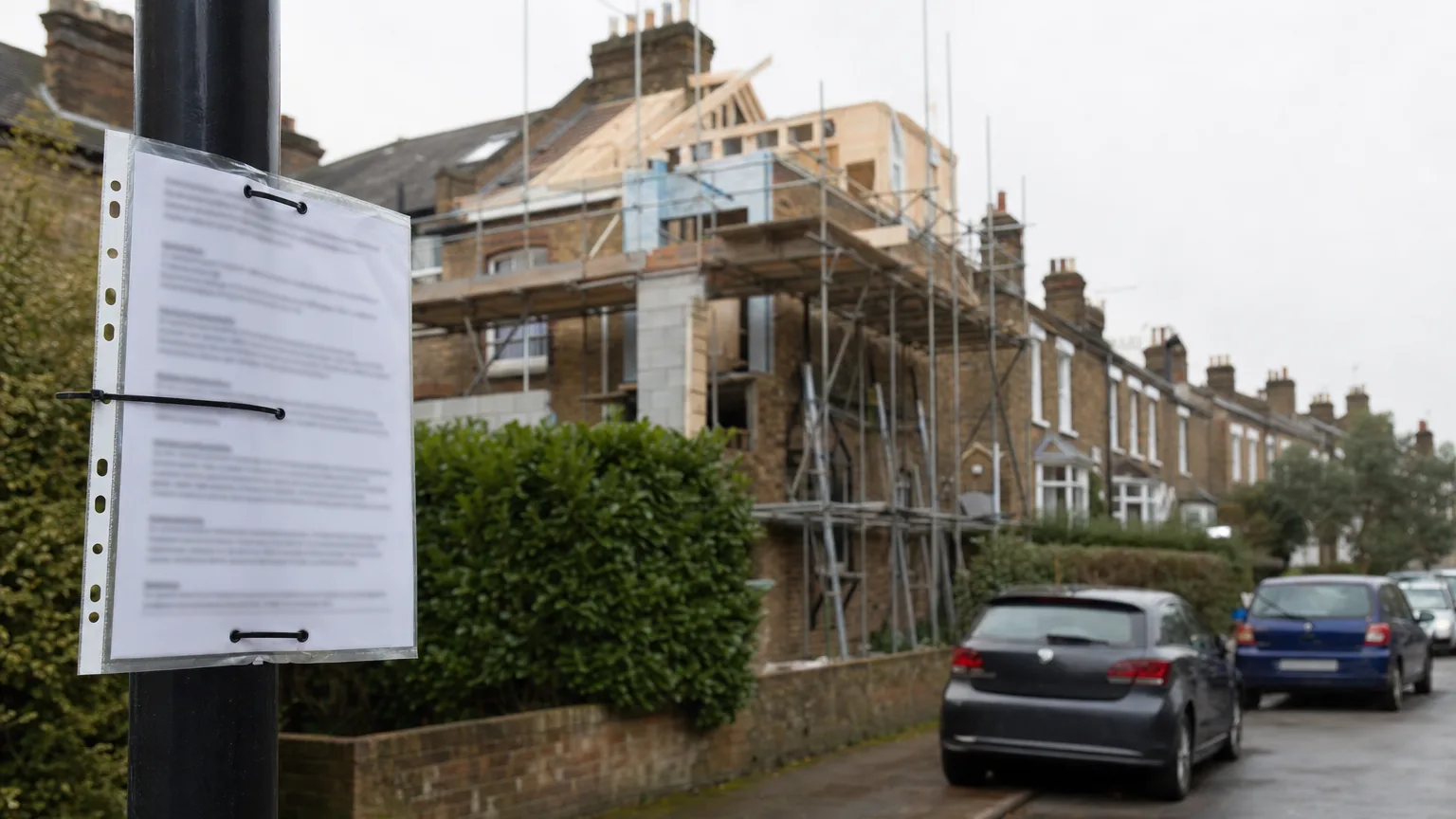
A planning application is a public record. Anyone can read what has been proposed for a house, a field or a high street unit, who applied, what the council decided and why. The difficulty is not access. It is that the records sit on hundreds of separate council websites, each with its own search page and its own wording.
If you would rather not work through those sites one at a time, you can search UK Planning Applications by address, postcode or council in one place. The rest of this guide explains where the records come from, how to read them, and what to look for when a property or a street matters to you.
Why Planning Applications Are Worth Checking
The volume is larger than most people expect. District-level planning authorities in England received 78,700 applications between April and June 2026 and decided 74,500, according to the government's planning applications statistics. They granted 88% of those decisions. Householder applications, which cover extensions, loft conversions and similar work to a single home, made up 37,700 of the decisions, or 51%.
Those numbers matter for three groups of people:
- Buyers. The planning history of a house tells you whether the extension was approved, whether an earlier scheme was refused, and whether the plot next door is about to change.
- Neighbours. You have a limited window to comment on a proposal, and you can only use it if you know the application exists.
- Investors and developers. Approvals and refusals on nearby sites show what a council will accept on a given street far better than policy documents do.
Where Planning Applications Are Published
Planning authorities have to make applications available to the public. In England, the law requires each authority to keep a planning register. It does not require that register to be online, but councils generally publish it as a search page on their website. There is no single government register covering the whole UK, and each nation has its own online service for submitting applications.
| Nation | Online application service | Where to look up an application |
|---|---|---|
| England | Planning Portal | The planning authority's own register |
| Wales | Planning Applications Wales | Your local planning authority, which must make every application publicly available |
| Scotland | ePlanning, on eDevelopment.scot | Your planning authority |
| Northern Ireland | Northern Ireland Planning Portal | The portal's shared public register. Mid Ulster District Council has its own planning portal |
The planning authority is not always the local council. In Wales, for example, the national park authority is the planning authority for properties inside a national park, so check which authority covers the address before you search.
Online registers typically let you search by address, postcode or reference number, and some add a map view or a weekly list of new applications. The quality varies. Some councils publish every drawing as a searchable PDF, while others offer scanned documents with file names that tell you nothing.
How to Read a Planning Application
Once you have found an application, the record usually contains the same core parts whichever council published it.
Reference Number
Each application gets a unique reference, often built from the year, a running number and a code for the application type, such as 26/01234/HOU. Formats differ between councils. Quote the reference in any comment or enquiry.
Application Type
The type tells you what kind of permission is being sought:
- Householder: work to alter or enlarge a single house, such as an extension or dormer. It does not cover flats.
- Full: a detailed proposal for new buildings or a change of use.
- Outline: the principle of development, with details to follow in a later "reserved matters" application.
- Listed building consent: work affecting a listed building, often alongside a full application.
- Lawful development certificate: confirmation that an existing or proposed use does not need permission.
- Prior approval: a lighter check for work that falls under permitted development rights.
- Discharge of conditions: evidence submitted to satisfy conditions attached to an earlier approval.
Status and Decision
A live application will show as registered, valid or under consultation. A finished one will show a decision: granted, granted with conditions, refused, withdrawn or decided on appeal. Councils word these differently, so "Grant of conditional permission" and "Approved with conditions" mean the same thing.
Key Dates
Look for the date the application was validated, the date the consultation closes and the target decision date. Government guidance on determining applications sets the statutory limits in England at 8 weeks for most applications, 13 weeks for major development and 16 weeks where an Environmental Impact Assessment is required. Councils often agree extensions with the applicant, so the target date can move.
Documents
This is where the detail lives. Expect an application form, a location plan, existing and proposed drawings, and for larger schemes a design and access statement plus technical reports. After a decision, the two documents worth reading first are the decision notice, which lists the conditions or reasons for refusal, and the officer's report, which explains the reasoning.
The officer's report is the most useful document on any decided application. It sets out which policies were applied, what neighbours and consultees said, and why the council reached its conclusion.
What to Check Before You Buy a Property
A planning search is one of the cheapest pieces of due diligence you can do. Work through it in this order.
- The property's own history. Search the address and read every application on file. Check that the extension, loft conversion or outbuilding you can see matches something that was approved.
- Conditions on past approvals. Conditions can restrict use, require obscure glazing, remove permitted development rights or limit occupancy. Planning permission usually runs with the land and not with the owner, so read the conditions before you buy.
- Refusals. A refused scheme tells you what the council will not accept on that plot, which matters if you plan to extend.
- Unimplemented permissions. A granted permission that was never built may have expired, or it may still be live and add value.
- Neighbouring applications. Search the street and the land behind the property. A pending application for a block of flats or a two-storey extension next door changes what you are buying.
- Larger proposals nearby. Look a little wider for major housing, commercial or infrastructure schemes that could affect traffic, views or demand.
Planning history is only one layer. Constraints such as conservation areas, listed buildings, tree preservation orders and flood zones shape what the council will approve in future, so read them alongside the applications. Our guide to UK planning maps and site location plans covers the maps that go with any application you decide to make yourself.
How to Comment on an Application
If a proposal affects you, you can comment through the council's register. Government guidance on consultation sets the consultation period in England at not less than 21 days. Councils publicise applications through site notices, letters to neighbours, newspaper notices and their websites, depending on the type of development.
Comments carry weight when they address planning matters: loss of light or privacy, highway safety, noise, design, and conflict with local policy. Loss of a view or an effect on your property's value are not material considerations and will not influence the decision.
Tracking Applications Over Time
Checking a register once tells you what has already been submitted. It does not tell you what arrives next month. You have three ways to keep watch.
- Council email alerts. Many councils let you register for notifications on a saved search or a specific application. These work well for one council, but you need a separate account for each authority you care about.
- Weekly lists. Many councils publish a list of applications received and decided each week. Reading them by hand takes time.
- A tracking service. PlanningTrack offers free email alerts for new or decided applications at a property or on a street, sent as a daily or weekly digest. Its coverage is growing council by council, so check that your area is included before relying on it.
Whichever route you choose, set the alert up before you need it. The consultation period starts when the application is publicised, not when you first hear about it.
Planning Application Data for Developers
If you are building a product that needs planning data, scraping council registers yourself is a long project. Each one has a different layout, different status wording and different rate limits.
The Property Insights planning applications API returns applications for a postcode or address in a consistent format, and tells you whether the council for that location is covered. Requests for councils outside our coverage are not charged. It sits alongside our planning constraints, flood risk, EPC and sold price endpoints, so one integration can cover most of a property due diligence report.
Frequently Asked Questions
Are planning applications public?
Yes. In England each planning authority must keep a register of applications that the public can inspect, and in Wales authorities must make every application publicly available. Publishing the register online is optional in England, though councils generally do.
How far back do online planning records go?
It depends on the council. An online register may only cover part of a property's history, so if you need older records, ask the council's planning department what it holds.
How long does a planning decision take?
In England the statutory period is 8 weeks for most applications and 13 weeks for major development. In practice many take longer by agreement. Between April and June 2026, councils decided 91% of major applications within 13 weeks or an agreed extended time, but only 19% within the 13 week statutory period itself. If your own application is refused, a householder appeal must be received within 12 weeks of the decision notice, and other appeals within 6 months.
Does a granted permission last forever?
No. In England the default is that development must begin within three years of the date permission is granted. The council can set a longer or shorter period, so check the conditions on the decision notice.
Property data, one integration
Build with UK property data
Browse our APIs for valuations, sold prices, EPCs, crime, schools, ownership and more.